This post sponsored by Volkswagen:
Subtitles available.
(I don't mind plugging them, since they have a major new factory here in Dresden, and they support the arts here bigtime.)
Tuesday, July 26, 2011

Monday, July 25, 2011
Spreewald

 |
| Ladies on a flatboat in the town of Lübben munching on pickles. |
My German friends, the Weidners, invited me for a weekend up there in the Spreewald in mid-July. One day, we rented kayaks and paddled the river and canals (never sure which was which), and the other day, we did a bike ride, mostly on dykes between waterways and farmland. Stayed the one night at what was essentially a B&B run by a middle-aged woman on her grandparents' old farm. (She gave me a jar of you-know-what as a parting gift.)
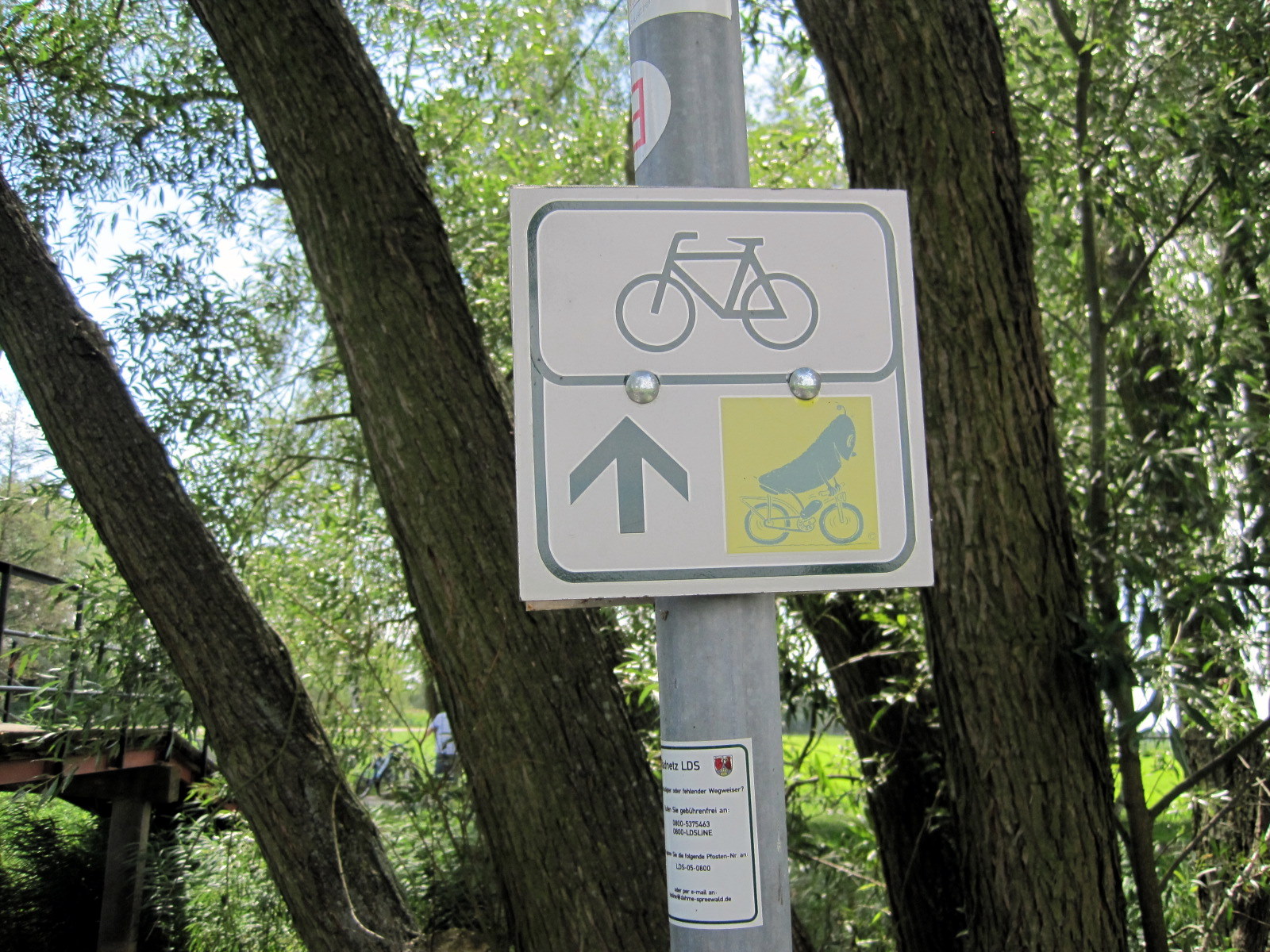 |
| One of many bike trails in the region. The Pickled Pedaler? |

To cap it all off, the highlight of the trip, the final sight before heading home was, yes, the.....
 |
| Pickle Museum! |
Monday, July 11, 2011
Phoenix

 It's been a long time since I've written, and of course the big thing that has happened in the meantime is my trip to play two concerti in Phoenix. Or more accurately, at Arizona State in Tempe. The concert went well and was well received and all that, but the main thing is that I got to Carolina's again after 18 years. Worth the trip, and the wait.
It's hard to think of what else to say. Most everyone was there. It's always fun to play a concerto with orchestra, something I do on average about every 4-5 years. I do feel a little funny when all those players are working just for me, it seems. And I wonder (if not assume) if they're hating it and waiting for the service to be over so they can go home. I do some of that when I'm accompanying a soloist, but usually I listen critically to the soloist and imagine how I would do up there. So here was one of my rare opportunities to see.
I remember from the first public performances I gave at the UNICEF Youth Concerts that I practically had to be pushed out the door onto the stage to play, I was so scared. Now, it's more intellectual: I tell myself I can do this, and I believe it. Then I tell myself to just do it, and I walk out decisively and play. Then, all the dumb things happen, but I won't go into that. I know how much the audience likes it. At least I think I do.
Carolina's hasn't changed in any way but prices. Can't wait to go back. Just west of the airport, if you're ever in Phoenix. You could do it by taxi during a layover of a couple hours.
Monday, May 23, 2011


Thursday, May 19, 2011
another castle

 Saw a wonderful sign within the castle area, just across from the side of the castle cathedral: "Historical Prison, with building permits, for lease or sale." I want to put in an offer, and when they ask what I plan to do with it, say "Keep prisoners there, of course."
I'm calling time on my last quiz. No entries, no winners. Constance probably thought it was too easy. It was. Google could solve it for you in .00017 seconds. The answer is (a), Eisenberg. The extra credit part was harder, and I was hoping someone could find the real answer and tell me, so I could confirm my theory: note the year, 1934, when the name of the town was changed from Eisenberg to Moritzburg (to match the name of the major landmark there, I said). Seems obvious to me that the Nazis decided to do this because Eisenberg sounded too Jewish to them. But I didn't find any evidence to confirm the idea. I still think it's right.
Wednesday, May 4, 2011
Moritzburg, Kollwitz, (quiz???)
 | ||
| Schloss Moritzburg |
Roughly 12 miles from Dresden is a little town out in the farmland called Moritzburg, named for the eponymous castle which was a hunting "lodge" for the 17th-18th century Dresden monarchs. Took a little trip out there recently. Absolutely idyllic, gorgeous castle in the middle of a lake, accessible over causeways.
 | |
| Rüdenhof, where Käthe Kollwitz died, with Moritzburg Lake in the background. She had a good view. |
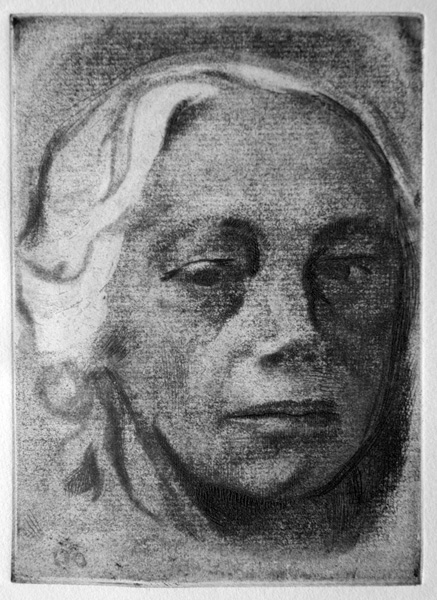 | |
| self portrait |
In 1934, the town containing the Moritzburg Castle was re-named "Moritzburg" to match the town's dominating landmark. Here's the quiz: What was its former name, the name it had carried for centuries?
(a) Eisenberg
(b) Freiburg
(c) Herzberg
(d) Pitzburg
For extra credit, WHY was it renamed?
Answer someday.
Monday, May 2, 2011
more funny German stuff (in my opinion)

It wants people to listen to Schönberg instead of Wagner, I take it because Wagner was beloved by Nazis and Schönberg wasn't, and was Jewish. It shows an image of an Egon Schiele portrait of Schönberg and a well-known standard one of Wagner (whose painter I don't know). The blue circle at the left edge calls people out to counter-demonstrations against the neo-nazis. It even uses typography to help make its point.
My god. People should listen to Schönberg over Wagner? Sure, they're both great composers, but 99% + of the demonstrators would certainly prefer Wagner's music if they heard both back to back. If they've even heard of them. Totally silly.
Then I noticed the little line at the bottom of the sign saying who put it out. Using lots of abbreviations, it seems to come from the anti-fascist committee of the student council of the Dresden Conservatory of Music. Great. Good left-wing students, as is expected in German universities. And just as thoughtful as you'd expect, too.
Subscribe to:
Posts (Atom)